
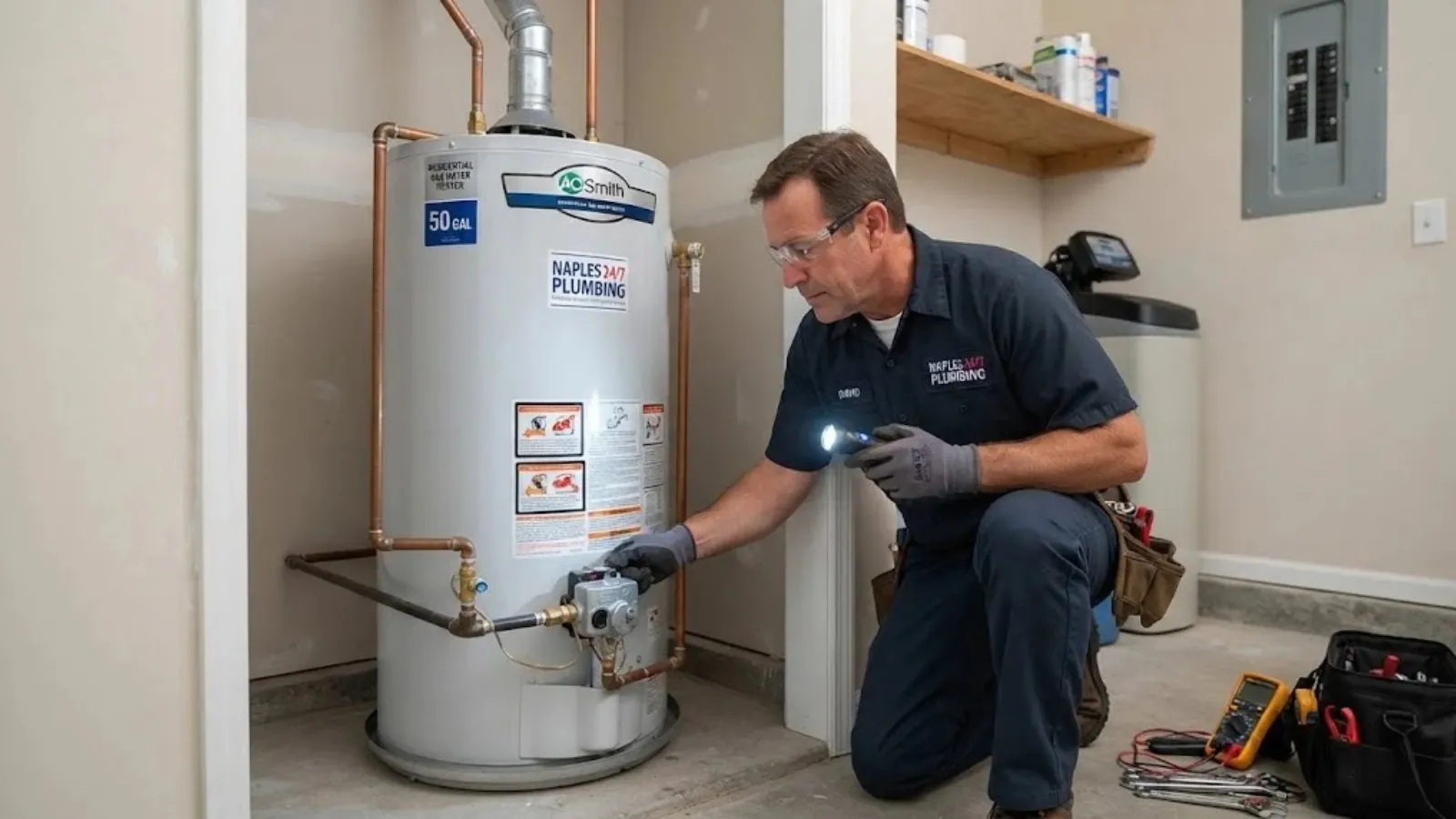
What the valve does in plain terms
Inside the valve is a spring that holds a seat closed against tank pressure. If pressure or temperature rises past the valve's rating, the spring gives way and water flows out through the discharge pipe. That keeps the tank from becoming a pressure vessel with nowhere to go.
It is a last line of defense. Normally the thermostat shuts the heater off long before the valve opens. If the valve opens often, something upstream is failing or the plumbing system is trapping pressure.
Summer heat, monsoon season and permits in Marana
Tucson's average highs run about 101 degrees in June and 100 in July, according to National Weather Service 1991 to 2020 normals. A garage or attic can be far hotter than that. Plan to inspect the heater, valve and discharge pipe before summer, when heat puts the most stress on them.
Monsoon season officially runs June 15 to September 30. Storm surges and power flickers can trip controls, so if your heater acts oddly after a storm, check the thermostat and the relief valve. A valve that opens after a storm is a reason to have the system checked, not ignored.
Marana lists water heater replacement under its permit application process, with a safety inspection afterward. Ask Development Services at (520) 382-2600 how it applies to your project. In unincorporated areas such as Picture Rocks, Pima County rules apply, and our Picture Rocks plumber page explains service there.
Rules of thumb for the discharge pipe
The pipe matters as much as the valve. These are general practices, and your installer and local code decide the details.
- The pipe runs downward the entire way, with no upward bends or traps.
- It is the same size as the valve outlet or larger, never smaller.
- It ends in an open, visible spot, usually a few inches above a floor drain or outside the building.
- It has no valve, cap, plug or threaded end on it.
- It is made from a material approved for hot water.
- It does not discharge onto a walking surface where someone could be burned.
How to test the lever safely
Many manufacturers suggest an occasional test. Check your tank's label and manual first, and skip the test if the valve looks corroded or the tank is old.
- 1
Confirm the pipe is in place
Make sure the discharge pipe runs to a safe spot and that a bucket sits under the open end.
- 2
Stand clear
Keep your body to the side of the pipe opening, not in front of it.
- 3
Lift the lever briefly
Raise the lever for a second or two, then let it snap back. A short burst of water should flow into the bucket.
- 4
Watch it reseat
The flow should stop when you release the lever. A dribble that continues means the seat may be fouled.
- 5
Check for leaks later
Look again an hour later. A drip after the test points to scale on the seat, and the valve may need replacement.
What a dripping or stuck valve usually means
The valve is a symptom indicator. The cause is often elsewhere.
| What you see | Likely cause | What to do |
|---|---|---|
| Steady drip while heating | Thermal expansion pressure | Ask a plumber about an expansion tank |
| Drip only after hot water use | Pressure spike or minor expansion | Monitor and have pressure checked |
| Constant flow | Thermostat failure or high pressure | Turn the heater off and call |
| Crusty white deposits at the seat | Scale from hard water | Replace the valve |
| Valve will not move when tested | Corroded or stuck seat | Do not force it, call a plumber |
| Water near the tank bottom | Tank leak, not the valve | Call about water heater repair |
Thermal expansion explained
Water expands when it heats. In a closed system, such as one with a check valve or a pressure reducing valve at the house inlet, that extra volume has nowhere to go. Pressure rises and the relief valve may drip each time the heater runs.
An expansion tank absorbs that extra volume. If your valve drips on a regular cycle, ask a plumber whether the system has one, whether it is charged properly, and whether the supply pressure is within a normal range.
Hot garages, hot attics and heater controls
Most newer Marana homes are built on concrete slabs, so water heaters often sit in garages or attics. Both spaces get very hot in summer. High ambient heat is hard on valves, thermostats and plastic fittings, and it can make a tank run warmer than expected.
Keep the area around the heater clear for airflow. Do not store paper, paint or fuel next to it. If your thermostat setting seems to climb on its own, a failing control may be the cause and the valve may be the only thing preventing a bigger problem.
Replacing a relief valve: when it is a DIY job and when it is not
Replacing the valve is a small task in theory, but it involves a pressurized tank and hot water.
| Situation | DIY reasonable? | Why |
|---|---|---|
| Valve is newer and tank is sound | Maybe | Match the rating on the tank label |
| Valve leaks and the tank is old | No | The tank may be failing as well |
| Gas water heater | Call a plumber | Gas connections and venting add risk |
| Valve opens under heavy use | No | Find the pressure or temperature cause first |
| Discharge pipe missing or capped | No | Needs correction by a licensed plumber |
Always shut off the power or gas, close the cold supply and relieve pressure before removing a valve. Use a replacement with the same pressure and temperature rating as the original.
When to call a plumber
Call if the valve leaks constantly, will not close, will not move, or if the discharge pipe is missing, capped or aimed at a floor. Our water heater repair page explains what a diagnosis covers.
If the tank is old and corroded, a new valve may only delay the bigger repair. Our water heater installation page explains what a proper new setup includes, relief valve and discharge pipe included. The 2024 International Plumbing Code (IPC) that the Town of Marana adopted calls for a relief valve with a properly routed discharge pipe on a water heater, so never cap it and replace it with a matching rated valve.
Frequently asked questions
A small drip is a warning, not a normal state. It often points to thermal expansion, high supply pressure, or scale on the seat. A plumber can find out which.
No. Capping defeats the safety purpose. If the tank overheats or pressure spikes, the pressure has no way out, and the tank can fail violently.
Follow the manufacturer's guidance. Many suggest an occasional test. Skip it if the valve is corroded, and call a plumber if it does not reseat.
Heat from a garage or attic can raise the tank and water temperature, and expansion can push pressure up. Hot weather can also stress an aging valve.
It must end in a safe, visible place. Many ends are over a floor drain or outside, depending on the layout. Ask your plumber how local code applies.
Scale can foul the seat and spring, so the valve may stick or leak sooner in harder water. Replacing it with the heater or at service time is common.