
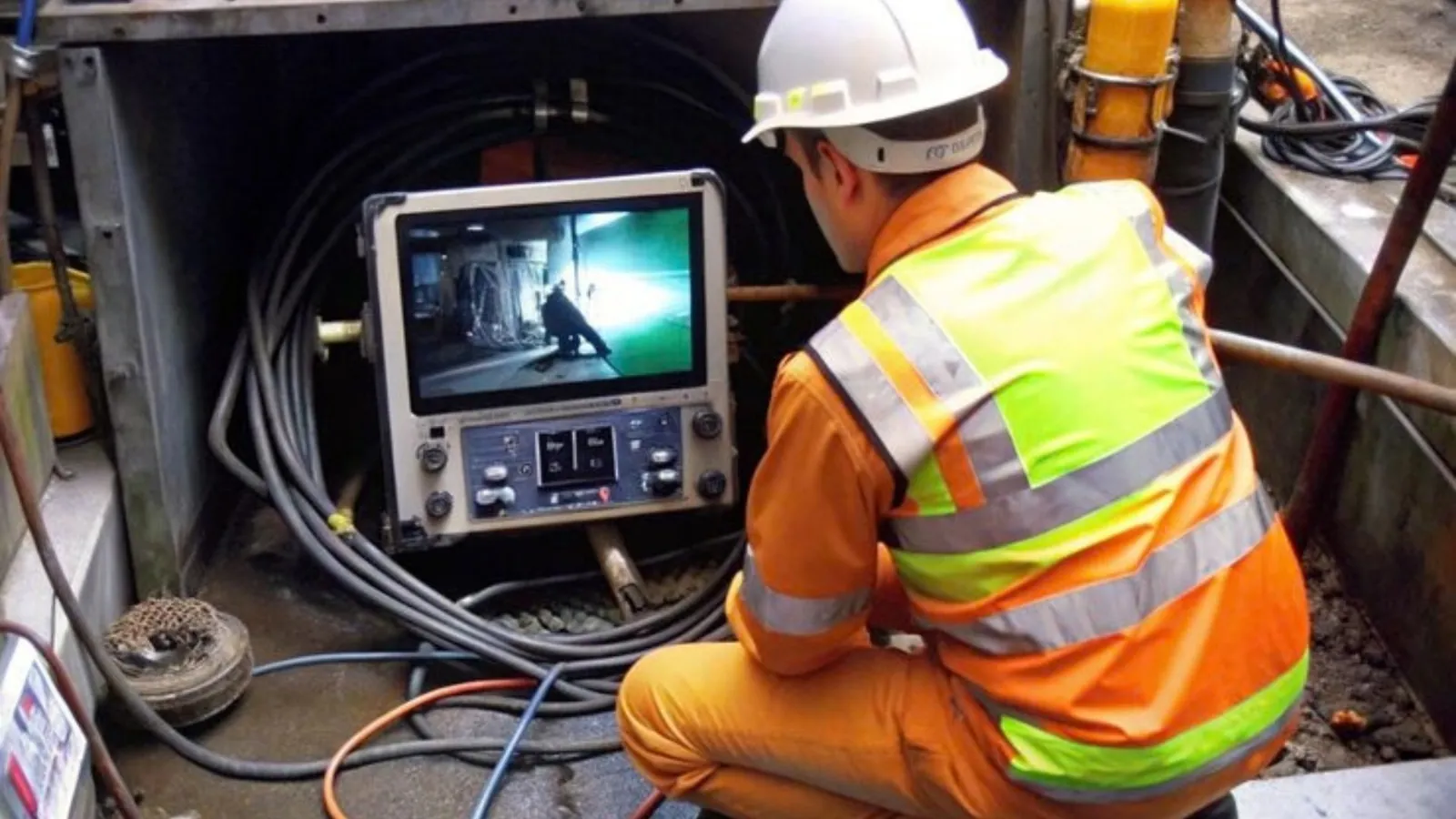
What the camera shows you
The camera head carries its own light and travels from a cleanout or fixture opening toward the street. It shows the pipe wall, the joints, the material and anything inside the line, including paper, grease, roots and debris.
Many cameras also report how far along the pipe each finding sits. That distance is what lets a repair target one spot instead of an entire run, which can save real money and digging.
Findings a camera can reveal
Each of these has a different meaning and a different next step.
Roots
Fine roots entering at a joint or crack, which show where the pipe has opened.
Cracks and breaks
A fractured wall or a separated joint that lets soil in and water out.
Bellies or sags
Low spots where water and solids pool, often leading to repeat clogs.
Offset joints
Two pipe sections that no longer line up, which catch paper and snag cables.
Buildup
Grease, scale and sludge coating the wall, a sign that cleaning may be due.
Collapse
A crushed or deformed section that blocks the camera and the flow.
What a camera cannot tell you
A camera shows the inside of the pipe, but it is not a pressure test. It cannot prove a joint is watertight, and a fully blocked line may stop the camera before it reaches the problem. Heavy buildup can also hide a crack until the line is cleaned.
It does not show the condition of the public main unless the camera reaches it, and it does not replace a utility's records. Treat the footage as strong evidence about the pipe it traveled, and not about everything beyond.
Want to see inside your sewer line?
Call (855) 575-2890 to schedule an inspection.
How the inspection goes
A typical visit is straightforward and the camera does the work.
- 1
Find the entry
We locate a cleanout, usually outside near the house, or remove a toilet or access fixture if none exists.
- 2
Run the camera
The camera is fed down the line while we watch a monitor and note the distance to each finding.
- 3
Record what we see
Video and notes capture the line from start to end so you have a record.
- 4
Explain the result
We walk through the findings in plain terms and say which need action now, which can wait, and which are normal.
When to book one
The camera pays for itself when it prevents a wrong guess.
Before buying a home
A general home inspection rarely looks inside the sewer lateral. A camera shows whether you inherit a problem.
After repeated clogs
If cable snaking keeps buying only a few weeks, the camera shows why.
Before hydro jetting
Pressure is wrong for broken or brittle pipe, so look first. See hydro jetting for the limits.
After a repair or cleaning
A final pass confirms the work and records the pipe's condition.
Before a remodel or slab work
Knowing where the line runs and how it looks helps plan around it.
Reading the findings: what each usually means
Use this as a guide. We explain what applies to your pipe.
| What you see | Usually means | Typical next step |
|---|---|---|
| Light grease or scale | Normal wear and buildup | Routine cleaning on a schedule |
| Roots at a joint | The pipe has opened at that spot | Clear the roots, then plan a repair |
| Standing water in a low spot | A belly or sag | Monitor, clean more often, or repair if it clogs |
| Offset or separated joint | Shifted or failed connection | Repair that section |
| Cracked or collapsed pipe | Structural failure | Repair or replace. See sewer line repair |
Not every flaw needs immediate action. A good report separates urgent items from ones to watch.
Locating the line and its depth
Some camera systems have a transmitter in the head that a handheld locator can pick up at the surface. Where that equipment is used, it can help estimate where and how deep the pipe lies. Accuracy depends on the pipe, the soil and what sits above it, so treat it as an estimate. Call 811 at least two working days before any digging, whatever the locator suggests.
Keeping your own sewer records
Footage is only useful if you can find it later.
- Save the video file and the written notes in a folder you can reach, with the date.
- Note the distance of each finding from the cleanout, and the pipe material.
- Write down the cleanout location and a photo of it, since most newer Marana homes have lines in or under the slab.
- Keep any repair or cleaning invoices next to the footage.
- Share the record with your agent or inspector when you sell the home.
- Compare a new inspection to the old one so you see what changed.
Marana homes, new and resale
A newer home may have a clean line, but construction debris, a sag or a poorly seated joint can still be present, and a camera can show it before problems appear. A resale home carries more unknowns, so the camera often matters more.
If you are buying near Marana's edges, including Picture Rocks, confirm first whether the property is on public sewer or a septic system, since a septic tank needs a different type of inspection. A camera inspection documents slope, joints and condition against what the 2024 International Plumbing Code (IPC), as adopted in Marana, expects, which gives you a recording to compare across written quotes.
What drives the cost of a sewer camera inspection
The price follows the length and access of the line, not a fixed fee.
Frequently asked questions
Most take a short visit, but the time depends on the line length, the access point and any blockage. We confirm the plan when you call.
It is a good idea. Home inspectors seldom run a camera through the sewer lateral, and repairs on a slab home can be costly. A recording gives you facts to negotiate with.
Roots, a sag, an offset joint or buildup are the usual reasons. A camera shows which one, so you fix the cause and not just the symptom.
It can show cracks, open joints and root entry, which often explain a leak. It does not prove watertightness, so other tests may be added if a leak is suspected.
Usually, since the camera enters from a cleanout and follows the pipe underground. If the line is blocked or collapsed, the camera may stop short.
The line from the house to the tank can be viewed. The tank and leach field are a separate matter, and Pima County regulates onsite wastewater, so confirm which system you have.
Ready to see your sewer line?
Call (855) 575-2890 to book a camera inspection in Marana.
Call (855) 575-2890