
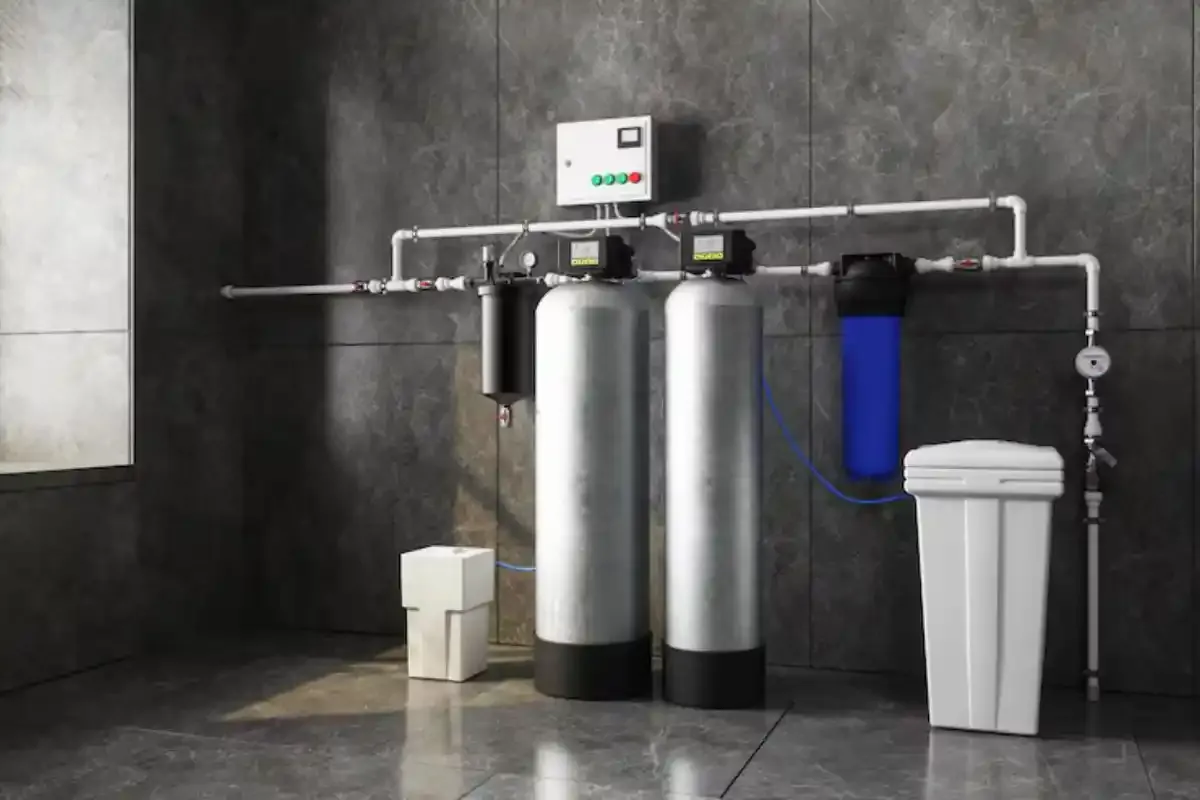
Your hardness depends on your water system
The Town of Marana's May 2026 hardness table lists each system separately. The summary is roughly 3 to 14 grains per gallon (GPG) depending on the neighborhood, but no single number covers the town.
| System | Neighborhoods the Town lists | Hardness |
|---|---|---|
| 10-150 Marana Municipal | Gladden Farms, Rancho Marana, Honea Heights, Yoem Pueblo, Marana Main Street | 6 to 12 GPG, about 9 GPG average (145 ppm) |
| 10-150 softer pocket | San Lucas, Warfield Circle, Amole Circle | 6 GPG (110 ppm) |
| 10-092 Picture Rocks | Picture Rocks, Continental Reserve | About 12 GPG (215 ppm) |
| 10-138 Airline/Lambert | Saguaro Bloom, Avra Valley Rd, Airline Rd, Lambert Ln | About 12 GPG (215 ppm) |
| 10-136 Palo Verde | Twin Peaks and Clayton | 12 GPG (220 ppm) |
| 10-329 Hartman Vistas | Hartman Vistas, Oasis Hills, Oshrin Park, Cortaro Crossings | 3 to 6 GPG, about 5 GPG average (76 ppm) |
| 10-406 Airport | Marana Regional Airport | 13 to 15 GPG, about 14 GPG average (245 ppm) |
Your provider may differ by address. Confirm it on your water bill or with the Town's service-area lookup, and ask Marana Water at (520) 382-2570.
Reading ppm and GPG without getting it wrong
Water reports use two units. Parts per million (ppm) is the Town's headline figure, and grains per gallon (GPG) is what most softeners use. One grain per gallon is about 17.1 ppm, so 215 ppm works out to roughly 12 GPG.
The Town's own FAQ tells customers to check which unit a softener uses. Mixing them up can leave a unit sized for a fraction of the real load, or far more than it needs.
Not sure what your water needs?
Call (855) 575-2890 and tell us your neighborhood.
Salt-based softener or salt-free conditioner
They are not the same thing, and they do different jobs.
Salt-based softener
- Removes hardness minerals by ion exchange
- Prevents scale on fixtures and in heaters
- Needs salt refills and a drain for regeneration
- Adds a small amount of sodium or potassium to the water
Salt-free conditioner
- Changes how minerals form crystals, rather than removing them
- No salt and no regeneration drain
- May reduce scale buildup but does not give soft-water feel
- Results vary, so set expectations honestly
What a softener does and what it does not
A softener lowers hardness. It does not purify water, remove bacteria, or turn tap water into drinking water. Filtration is a separate stage with its own purposes, such as taste, sediment or chlorine reduction.
Filtration needs a water test before anyone picks a system. We do not name products or brands, and we will say plainly when a filter will not do what someone hopes it does.
Sizing a softener from hardness and household
Sizing is arithmetic, not guesswork.
- 1
Find your hardness in GPG
Use the Town table for your system. Convert ppm to GPG if needed.
- 2
Count daily water use
A common planning figure is gallons per person per day, multiplied by the number of people at home.
- 3
Multiply to get grains per day
Hardness times gallons used gives the grains the softener removes each day.
- 4
Pick a capacity and regeneration cycle
A unit sized so it regenerates every few days wastes less salt and water than one that regenerates daily.
What a planned softener install needs
A few things have to be in place before a softener works.
- A cold water supply line where the softener can tie in, usually before the water heater
- A drain connection for the regeneration cycle, with an air gap
- A nearby electrical outlet for the control valve
- Floor space for the tank and a salt brine tank, with a bypass valve for service
- Outdoor hose bibs and irrigation left on hard water if you prefer, which saves salt
Service on the softener you already have
Softeners wear in familiar ways. Salt bridges block the brine tank, resin beads break down, control valves stall, and drain lines clog. Hard water that returns after a long soft stretch is a common sign, as is a salt level that never drops.
We service existing units, including water conditioner repair. Good records help, so note the model and the settings before the call.
Picture Rocks treatment context
The Town reports that the Picture Rocks system is treated for PFAS and 1,4-dioxane at the Picture Rocks Water Treatment Campus, online since March 2021. That is context about the municipal supply, not something a softener changes. Hardness there averages about 12 GPG. Our Picture Rocks page has more on the area, and the County, not the Town, handles permits there.
What to do before you call about a softener
- Find your water system name on the Town's hardness table or your water bill.
- Note how many people live in the home, since that affects softener sizing.
- Check where a drain and a power outlet sit near the water line entry.
- Decide whether you need softening, filtration for taste, or both before you compare quotes.
Softened water and the rest of the plumbing
Scale is what shortens the life of a tank. A softener cuts it, which helps a tankless water heater most of all, since its heat exchanger is the first place scale causes trouble. A softener install also touches the plumbing around it, which our plumbing installation work covers.
A softener ties into your supply and needs a drain connection built to the 2024 International Plumbing Code (IPC) the Town of Marana has adopted, so ask the installer how the brine drain and bypass will be set up.
What drives the cost of a softener or filtration job
Cost follows your hardness, your household size, and how easy the connections are.
Frequently asked questions
The Town lists Gladden Farms on system 10-150 at 6 to 12 GPG, about 9 GPG on average. It is not the airport figure of about 14.
The Town says hardness poses no health risk. We do not diagnose health effects of water, so questions about that go to your doctor or your water provider.
Divide ppm by about 17.1. A reading of 215 ppm is roughly 12 GPG.
A salt-based softener removes hardness. A salt-free conditioner changes how scale forms and does not soften. We explain both and size the one you pick.
Filtration choices depend on a water test, and we do not guess. We can talk through what to test and what a filter can and cannot do.
Yes, we service existing softeners and water conditioners. Salt bridges, control valve problems and drain clogs are the usual causes.
It reduces scale that builds in a tank or on a heat exchanger. It does not replace flushing and maintenance. See our water heater repair page for what scale does.