
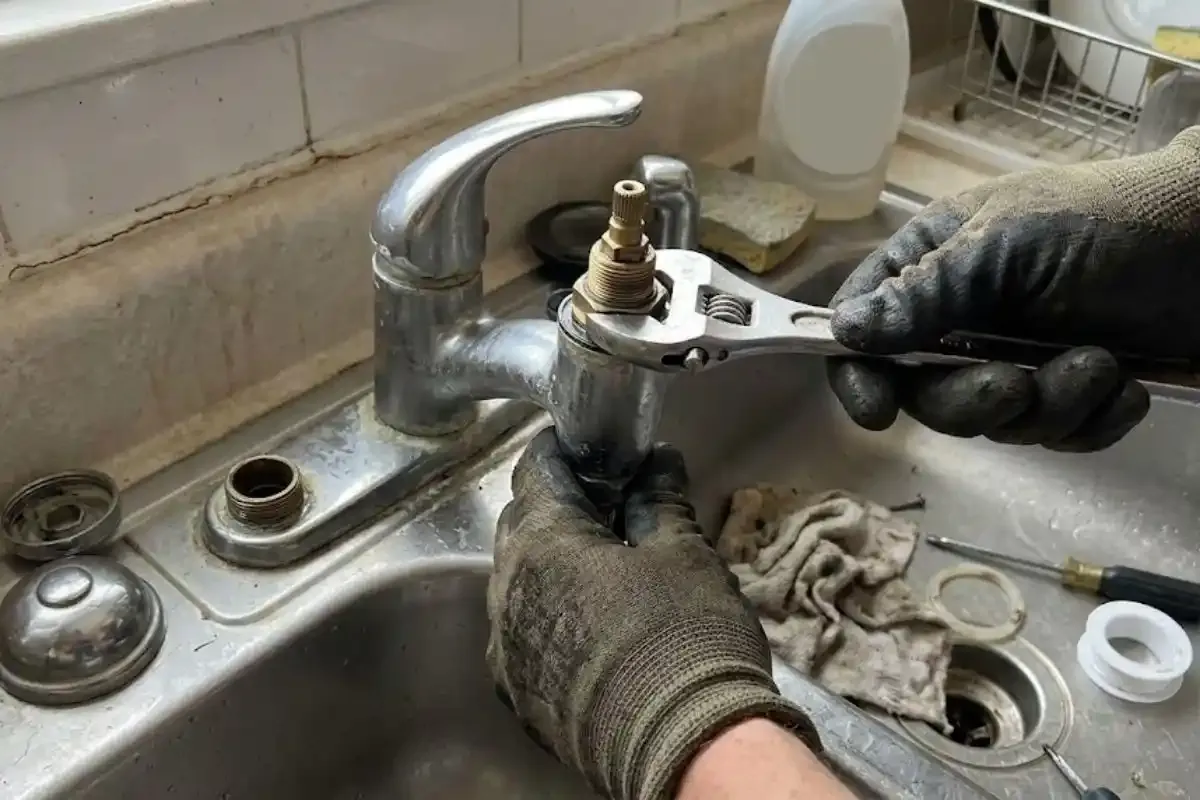
Which kind of single-lever faucet do you have
Most single-handle faucets use one of two internals. Knowing which saves a wasted trip to the store.
Cartridge type
- A tube-shaped insert sits under the handle
- Lever moves smoothly up, down and side to side
- Drips from the spout usually mean a worn seal or scale on the cartridge
- Replacement cartridges are specific to brand and model
Ball type
- A round ball with slots sits under a cap and cam
- Common on older kitchen faucets
- Leaks at the base of the handle often point to worn seals and springs
- Repair kits include seats, springs, and a new ball if needed
Two more types you may run into
Some single-handle faucets use a ceramic disc cartridge, where two polished discs slide against each other. They resist wear well, but scale or grit between the discs can make the lever stiff or leave a drip. Replacement is the same as for any cartridge, with the water off and the new part matched to the old.
Bathroom and shower valves sometimes use a pressure-balancing cartridge. The steps are similar, but the valve is in the wall, so go slowly and call if you cannot see a clean way to reach it.
Hard water and the faucets in Marana
The Town of Marana table puts the water at roughly 3 to 14 grains per gallon depending on the neighborhood. The Town says it leaves deposits on bath fixtures, dishes and glassware. In a 12 GPG area, that scale builds on cartridges and aerators faster, so check them often.
Homes on the Marana Municipal system near Gladden Farms average about 9 GPG, while the Hartman Vistas system averages about 5 GPG. A faucet that clogs every few months in one area may last longer in another, so adjust your cleaning interval to your system.
If scale is a constant fight, a softener on the main line protects every faucet, though it is a larger decision than a cartridge.
Where the water shows up
The location of the drip tells you which part to blame.
| Where it leaks | Likely part | Typical fix |
|---|---|---|
| Drips from the spout when off | Cartridge or seats and springs | Replace the cartridge or kit |
| Seeps around the handle base | O-rings or the cap | Replace O-rings |
| Wet cabinet under the sink | Supply lines or shutoff valve | Tighten or replace the line |
| Weak or sprayed stream | Aerator clogged with scale | Clean or replace the aerator |
| Handle is stiff or gritty | Mineral buildup in the cartridge | Clean or replace the cartridge |
| Hot and cold mix wrong | Cartridge rotated or worn | Reset or replace the cartridge |
Replace the cartridge in order
Lay a towel in the sink so small parts do not fall down the drain.
- 1
Shut off the water
Close both angle stops under the sink, then open the faucet to relieve pressure. If a stop will not close, shut off the house main.
- 2
Remove the handle
Look for a small cap, button or set screw. Pry the cap off, then loosen the set screw with the matching hex or screwdriver and lift the handle away.
- 3
Take off the cap and retaining nut
Unscrew the decorative cap, then the nut or clip that holds the cartridge. Photograph each layer before moving on.
- 4
Pull the cartridge
Grip it and pull straight up. If it is stuck with scale, a gentle wiggle works better than force. Note which way it faces.
- 5
Match the new part
Take the old one to the store. Brand, size and the number of splines must all line up.
- 6
Install and test
Set the new cartridge in the same direction, replace the nut and handle, then open the stops slowly and check for drips.
Why single-lever faucets start to drip
Four causes cover most drips.
Worn rubber seals
Seals and O-rings harden and lose their grip over time, so water slips past when the lever is closed.
Mineral buildup
Scale roughens the cartridge and the seat, which prevents a tight seal even with new rubber.
Loose parts
A retaining nut that has backed off lets the cartridge shift and leak.
Cracked or pitted seats
A damaged seat will keep dripping until the cartridge or the valve body is replaced.
Clearing the aerator
The aerator is the small screen at the tip of the spout. Unscrew it by hand or with a rag-wrapped pair of pliers, then tap out the grit. Soak the pieces in white vinegar for an hour, scrub them with an old toothbrush and reassemble in the same order.
If the screen is torn or the white crust will not budge, buy a new one for a few minutes of work. Run the water for a bit before you put it back, so loose debris flushes out of the faucet.
Repair or replace the faucet
Repairs make sense up to a point. After that you are paying twice.
| Situation | Repair | Replace |
|---|---|---|
| Single leak, otherwise good faucet | Yes | No |
| Cartridge is hard to find | Maybe | Often smarter |
| Pitted finish or cracked body | No | Yes |
| Repeated leaks after several repairs | No | Yes |
| Corroded or seized fittings | Risky | Often better |
| You want a different style or flow rate | No | Yes |
Before you buy parts
A small checklist saves a second trip.
- Note the brand, usually stamped on the handle or the body.
- Take photos of the faucet from the front and under the handle.
- Bring the old cartridge or ball kit to compare.
- Buy a spare O-ring set and plumber's grease.
- Check that the angle stops close fully before you start.
- Clear the area under the sink so you can see and reach.
When to call a plumber
Call if the angle stop is seized or leaking, if the faucet body is corroded or if the new cartridge still drips. Also call if you find water inside the cabinet that you cannot trace, since a hidden leak can damage cabinet floors.
Our faucet repair visits cover cartridges, supply lines and shutoffs. If the same sink drains slowly or the disposal under it leaks, we can check them in the same visit, and Picture Rocks homes are within our service area. Faucet repair keeps the fixture within the 2024 International Plumbing Code (IPC) the Town of Marana has adopted as long as you use matching parts, so buy the cartridge made for your brand and model.
Frequently asked questions
Usually a worn cartridge seal or scale on the cartridge seat. Replacing the cartridge fixes most drips, and a vinegar soak can help in the meantime.
No. Closing the angle stops is the first step. Without it, removing the cartridge will spray water.
Soak the aerator and any removable parts in white vinegar, then scrub gently. Avoid harsh cleaners on finished surfaces.
Look for a hidden set screw under a cap or button, and use the right size tool. Scale can hold the handle, so a little vinegar on a rag around the base may help.
If parts are available and the body is sound, a cartridge is a fair fix. If the finish is pitted or the faucet leaks again soon after, replacement is smarter.
Yes. Keep an eye on the cabinet below for drips from the supply lines and the disposal. A leak there can look like a faucet problem, so dry the area and check where water first appears.
Still deciding? Call the 24/7 line.
A person answers, listens to the problem, and tells you what happens next.
Call (855) 575-2890