
Signs the unit is scaling up
You do not have to wait for a breakdown. These are the common early hints.
Lukewarm water
The heater runs but the water never gets as hot as the setting. Scale on the heat exchanger insulates it from the flame.
Error codes
Many models show a code for flow, temperature or overheating when scale builds. Look the code up in your manual before assuming the part is bad.
Rumbling or kettle sounds
Water boiling under scale can make noise. It is a sign to flush soon.
Flow slows at the tap
A clogged inlet screen or scale in the water passages lowers flow and can stop the unit from firing.
What you need on the bench
Gather everything first, because the heater is out of service while you work.
- Isolation valve kit (a hot, cold and relief valve set with purge ports). If your unit lacks one, a plumber can install it.
- Small utility pump, usually submersible, and two washing machine or garden hose lengths.
- A five gallon bucket.
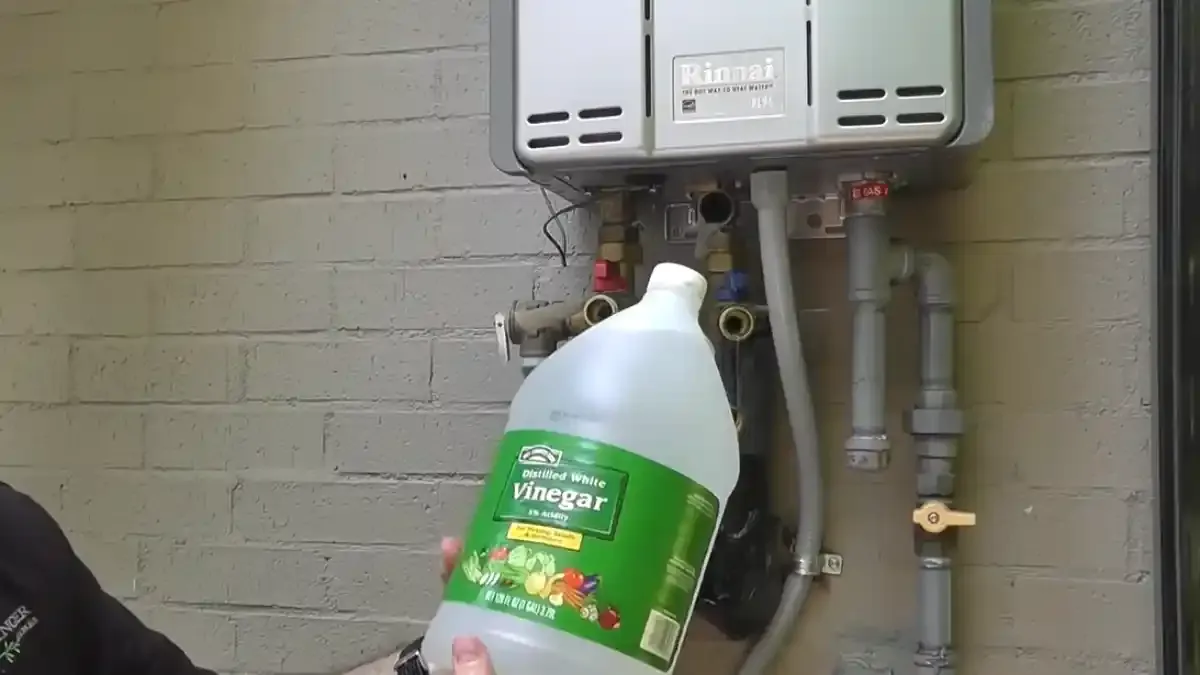
- Several gallons of undiluted white vinegar, in the quantity your manual calls for.
- A flathead screwdriver or pliers for the filter and caps.
- The installation manual, since valve positions and times differ by brand.
How hard is the water feeding your heater?
The Town of Marana table lists Gladden Farms and the Tangerine corridor at an average of about 9 GPG, with a range of 6 to 12. Picture Rocks, Saguaro Bloom and the Silverbell areas sit at about 12 GPG, and the airport system averages about 14. Because of those differences, tankless owners in a 12 GPG area should plan on more frequent flushing than neighbors at 5 GPG.
The Hartman Vistas system is lower, at roughly 3 to 6 GPG, with an average of 5. A heater there will still scale, but more slowly. In every case, the Town says hardness poses no health risk and instead leaves deposits, so the issue is your equipment, not your water's safety.
Check your bill to see which system serves you, and use that GPG figure to decide how often to flush.
The flush, from first valve to last
Read your manual first. The sequence below is a general outline.
- 1
Power down
Switch off the electrical supply. If the unit is gas-fired and your home has gas service, close the gas shutoff too.
- 2
Close the isolation valves
Shut the cold and hot service valves so water cannot flow through the unit.
- 3
Open the purge ports
Remove the caps from the two purge ports and release the little bit of pressure, with a bucket underneath.
- 4
Connect the hoses and pump
Run one hose from the pump in the bucket to the cold port and another from the hot port back into the bucket.
- 5
Fill with vinegar and run the loop
Pour in the vinegar, switch on the pump and circulate for the time the manual gives, often about forty-five minutes to an hour.
- 6
Drain and rinse
Empty the vinegar, then flush with clean water by opening the cold valve with the hot hose draining to the bucket.
- 7
Clean the inlet screen
Take the filter out and rinse off grit and scale, then reinstall it.
- 8
Restore everything
Close the purge ports, open all valves, run a hot tap to bleed air, then turn on power and gas.
Flush or hire: a quick call
Be sure of your comfort with valves, hoses and power.
| Situation | DIY reasonable | Hire a plumber |
|---|---|---|
| Valve kit already installed, manual in hand | Yes | Optional |
| No isolation valves on the unit | No | Yes, valves go in first |
| Gas appliance and unsure about the gas shutoff | No | Yes |
| Error codes return right after a flush | No | Yes |
| Valves are corroded or seized | No | Yes |
| Unit is in a hot attic or tight closet | Care needed | Consider help |
Checks after the flush
Spend ten minutes confirming the heater is back to normal before you walk away.
- Run the hot tap and watch for air spitting, which should clear in a minute or two.
- Look at both valves and both purge caps for drips while the water is flowing.
- Compare the temperature to your setting after a few minutes of steady use.
- Note any error code that appears and write it down for the manual or a plumber.
- Write the flush date on the unit or in your phone so you can track the interval.
How often to descale in hard water
Follow the manual first. Makers commonly suggest a yearly flush in average water, and homes with hard water usually need it more often. Watch for the signs above and adjust to what you see.
If you flush and scale returns fast, the better fix is to treat the water. A softener for the whole house takes the hardness out before it reaches the heater, and it helps fixtures and dishwashers too. Our water softener and filtration page explains how installation works.
Safety notes on gas and power
If your home has natural gas service and you smell rotten eggs, hear hissing or sense a leak, leave the house at once. From outside, call 911 and the Southwest Gas leak line at 877-860-6020. Do not touch switches, use lighters or start an engine. Call us only after you are safe.
For electric-only models, the risk is shock. Turn the breaker off and verify it before touching wiring or opening panels.
When to call a plumber
Call if the flush does not restore hot water, if the heater keeps throwing the same code, if you find a leak at the heat exchanger or if any valve will not turn. Persistent faults can mean a failed sensor or fan, not just scale.
Our tankless water heater team can service the unit or add isolation valves, and homes in Picture Rocks are in our area, with Pima County rules for any permit. Tankless units are installed under the 2024 International Plumbing Code (IPC) and the International Fuel Gas Code as the Town of Marana amended them, so flushing should use the isolation valves your installer is expected to have set.
Frequently asked questions
Follow the manual, then adjust. Hard-water homes usually need flushes more often, and a 12 GPG area like Picture Rocks or Saguaro Bloom scales faster than a 5 GPG area like Hartman Vistas.
Use only what your manufacturer allows. Some makers sell their own descaling solution, and harsher acids can damage seals.
Scale on the heat exchanger is common, but a clogged filter, low flow or a failed sensor can cause the same symptom. Flush and clean the screen first, then call if it persists.
Yes, in practice. They let you close the unit off and connect hoses. If your heater has none, a plumber can install them.
It cuts the scale a lot, but it does not replace the maintenance in your manual. Check the schedule for your model.
Garages and attics get very hot, and Tucson average highs in June run about 101 F. Keep the vents clear and the area free of clutter.
Heavy scale can overheat the heat exchanger and shorten its life. A flush done on time removes most deposits, but a unit that was neglected for a long time may need parts.
Still deciding? Call the 24/7 line.
A person answers, listens to the problem, and tells you what happens next.
Call (855) 575-2890