
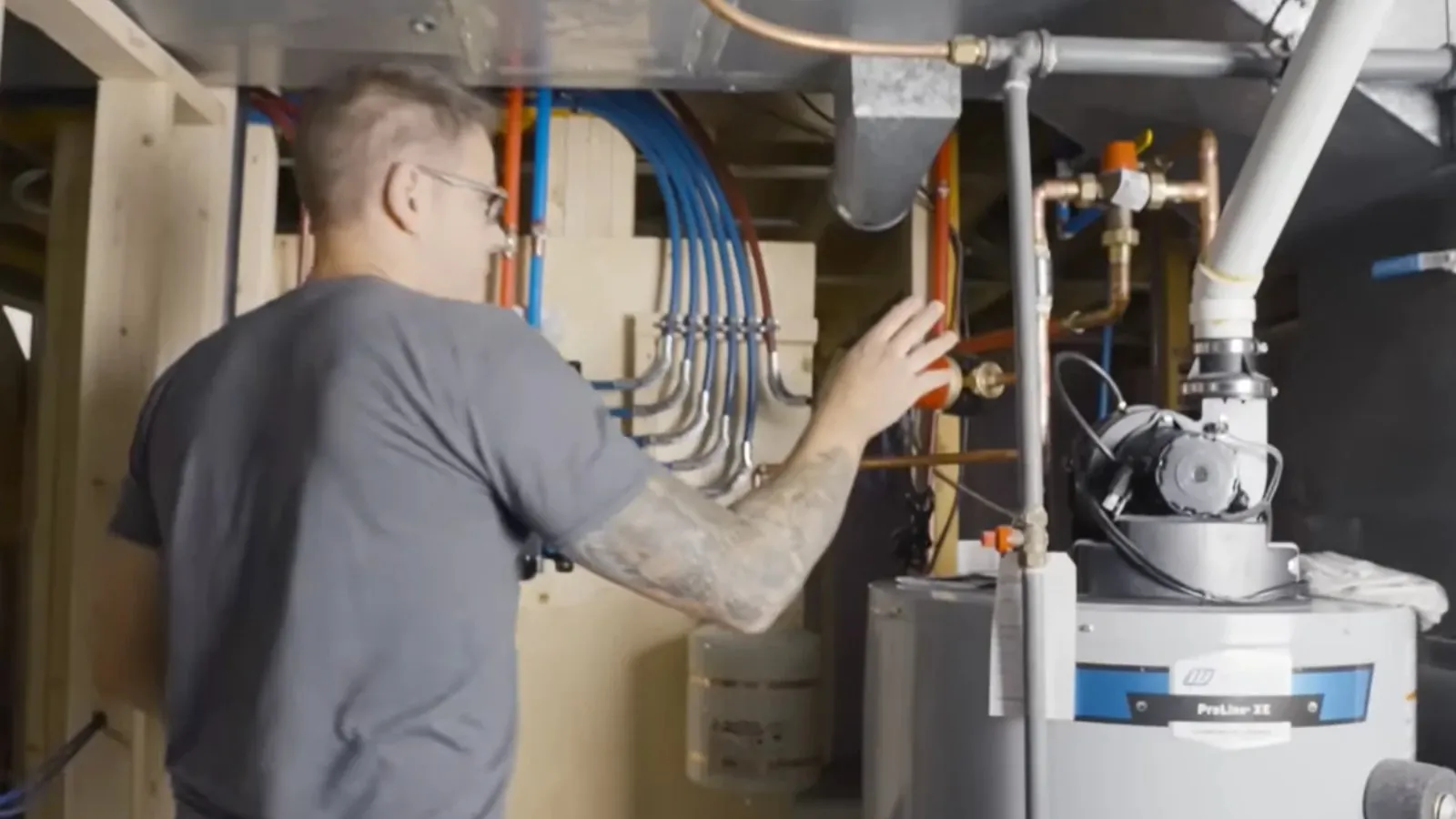
Why a rod is sacrificed inside the tank
A steel tank is lined with glass, but tiny flaws in that lining expose bare steel to hot water. The anode rod, usually made of magnesium or aluminum, is more reactive than steel, so the water attacks the rod first. As long as some rod remains, the tank is protected.
Once the rod is mostly gone, the tank itself begins to corrode. That can take years, but it ends with a leak that cannot be repaired. Checking the rod is a way to buy time before that point.
How hard water and sediment shorten tank life
Hard water does not hurt your health, but it does hurt hardware.
Scale on the heating surfaces
Minerals bake onto the bottom of a gas tank or onto electric elements. Heat transfer slows and parts overwork.
Sediment layer
A layer of grit and scale settles at the bottom. It can cause popping or rumbling as water boils under it.
Faster rod consumption
Water chemistry affects how quickly the rod wears. Some rods need checking sooner than others.
Clogged drain valve
Sediment can block the drain valve, which makes flushing harder and may hide the problem.
Higher operating stress
A coated tank needs more energy to heat the same water, and parts last less long.
What the Town's hardness table says about your address
The Town of Marana states that several different water providers serve the area, and the May 2026 hardness table is split by system. Marana Municipal shows 6 to 12 grains per gallon with an average of about 9, while the Picture Rocks system averages about 12. Your row decides how often you flush and how soon you check the rod.
The Town describes Arizona water as passing through soils rich in calcium and magnesium, which leaves deposits on fixtures and dishes. It says hardness poses no health risk. For a water heater, that deposit shows up as sediment and scale, so write your flush dates on a calendar.
Providers can differ by address, so confirm yours on your bill or through the Town's service-area lookup. If you live in Picture Rocks, our Picture Rocks plumber page has the local water details. The Town's FAQ also advises checking whether a softener uses ppm or grains per gallon before you compare models.
Marana hardness by water system and what it means for your tank
The Town of Marana publishes hardness by system. Use the row that matches your provider, and confirm it on your bill.
| System or area | Hardness | What it means for a tank |
|---|---|---|
| Marana Municipal (Gladden Farms, Tangerine corridor, Rancho Marana, Honea Heights) | 110 to 200 ppm, about 6 to 12 GPG, average 9 | Moderate to high. Plan a yearly flush and a rod check every few years. |
| San Lucas, Warfield Circle, Amole Circle | 110 ppm, 6 GPG | Moderate. A periodic flush is usually enough. |
| Picture Rocks and Airline/Lambert (including Saguaro Bloom) | 210 to 220 ppm, about 12 GPG | High. Flush more often and inspect the rod sooner. |
| Palo Verde (Twin Peaks and Clayton) | 220 ppm, 12 GPG | High. Treat like the Picture Rocks row. |
| Hartman Vistas and nearby neighborhoods | 56 to 100 ppm, about 3 to 6 GPG, average 5 | Lower. Upkeep still matters, but intervals can be longer. |
| Marana Regional Airport system | 230 to 260 ppm, 13 to 15 GPG, average 14 | Highest. Frequent flushing and close monitoring. |
One grain per gallon is about 17.1 ppm. Dove Mountain is not in the Town table, so check with your provider if you live there.
How to inspect the anode rod
This job needs a breaker bar or long socket and some strength. Skip it if you are unsure, and call a plumber.
- 1
Turn off the power or gas
Switch off the breaker for an electric heater or set a gas control to its off or pilot position.
- 2
Close the cold supply
Shut the cold water valve above the heater, then open a hot tap to relieve pressure.
- 3
Lower the tank level
Drain a few gallons through a hose so the water is below the rod fitting, then catch drips in a bucket.
- 4
Loosen and lift the rod
The hex head sits on top of the tank. A long socket and breaker bar are usually needed because the fitting can be stuck.
- 5
Judge the condition
A rod worn to a thin core, or one with sections bare of metal, should be replaced. A rod thick and covered with scale is still working.
- 6
Reinstall with sealant
Wrap the threads with approved tape or sealant, tighten firmly, open the cold valve and check for drips before restoring power.
A simple tank upkeep routine for hard water
None of this prevents an old tank from failing, but it often extends useful life.
- Flush a few gallons from the drain valve once or twice a year, more often in harder areas.
- Inspect the anode rod every few years, sooner at the hard end of the table.
- Test the relief valve lever as the manufacturer suggests.
- Keep the area around the tank clear and dry, with a drain pan beneath it.
- Write the install date on the tank with a marker.
- Look for rust streaks, damp spots or mineral crust at fittings during each check.
Repair or replace: how to decide
The question is whether the tank itself is sound. Parts can be replaced. A rusted shell cannot.
| What you find | Tank condition | Likely decision |
|---|---|---|
| Rod worn, tank dry, no rust | Sound | Replace rod, flush, keep the heater |
| Failed thermostat or element | Sound | Repair the part |
| Heavy sediment, rumbling, slow recovery | Aging | Flush once, then plan for replacement |
| Rust-colored hot water | Possible corrosion | Inspect before spending on parts |
| Water pooling at the base | Leaking tank | Replace the heater |
| Tank near the end of its expected life | Uncertain | Compare repair and replacement quotes |
When a tank is past saving
A tank that leaks from the shell, not from a fitting, cannot be repaired. Corrosion has gone through the steel. Adding a new anode rod at that point does nothing. Our water heater repair page explains which problems are fixable.
If the heater is old, has heavy sediment and a failing rod, putting money into parts may only delay the replacement. Treat the decision as a trade between a likely second failure and a planned swap.
Softeners, filters and anode rods
A softener removes the minerals that cause scale, which helps tank life. Softened water can speed up rod wear in some tanks, so a plumber may suggest a different rod type. Our water softener and filtration page covers the trade-offs.
If you add a softener, tell the installer about the heater, and plan a rod check sooner than you would otherwise. Maintenance on a tank in Marana is separate from the permit work the 2024 International Plumbing Code (IPC) governs, but replacing the tank itself is permitted work, so confirm that when repair stops making sense.
Frequently asked questions
It varies with water chemistry and usage, often several years. Harder or more reactive water can use it up sooner, so inspect it on a schedule.
Sometimes. The fitting can be stuck tight, and the tank must be partly drained. If the rod will not budge or space is tight, call a plumber.
It removes sediment from the tank bottom and helps the heater run more evenly. In harder areas such as Picture Rocks and the airport system, flushing matters more often.
Sediment at the bottom traps water, which boils and pops. A flush may help. If rumbling returns quickly, the tank may be heavily scaled and nearing replacement.
Not quite. The Town table shows Gladden Farms at about 9 grains per gallon on average, with a range of 6 to 12, while the Picture Rocks system averages about 12.
No. It reduces scale, but the tank, rod and relief valve still need checks. A softener may even change which rod type works best.
Unsure if your tank is worth saving?
Call (855) 575-2890 and we will check it and explain the options.
Call (855) 575-2890